On the Ninth of Av: The Temple Within the Human Heart
A reflection inspired by the spirit and ideas of Itzhak Bentov
Every year, Tisha B'Av asks us to sit with destruction. Not to glorify it, not to become trapped in grief, but to remember that civilizations, temples, and even identities can collapse. The Ninth of Av is an invitation to witness impermanence without surrendering hope
This year, that invitation feels especially heavy
The Middle East continues to endure war. Families mourn on every side of the conflict. Ancient stones continue to emerge from the earth as archaeologists uncover structures connected to Jerusalem's long history. Some see these discoveries as signs of prophecy, others as remarkable historical findings. Whatever one's beliefs, the past has a way of reminding us that humanity has always searched for meaning amid conflict
If Itzhak Bentov were alive today, he might smile gently at our tendency to become hypnotized by the external drama
Bentov spent his life exploring consciousness, not as an escape from reality, but as a way of understanding it more deeply. He believed that human awareness evolves through cycles of expansion and integration. From that perspective, history itself behaves almost like a living organism; periods of stability interrupted by moments of profound transformation
"The universe is not moving toward chaos. It is moving toward greater consciousness. Chaos is simply what growth feels like from the inside."
Bentov never suggested that suffering was desirable. Rather, he proposed that moments of instability often precede new forms of organization. Just as the body heals through countless microscopic processes invisible to the naked eye, societies also reorganize themselves through countless acts of compassion, creativity, and courage that rarely make headlines
The rabbis taught that the Second Temple was destroyed because of sinat chinam, baseless hatred. Whether taken literally or symbolically, that teaching remains astonishingly relevant. If hatred destroyed what generations built, then perhaps love, curiosity, and responsibility are the only materials capable of rebuilding it
Tikun Olam
Too often translated simply as "repairing the world," tikkun olam is not merely social activism, nor is it passive optimism. It is the daily recognition that every interaction slightly alters the fabric of reality. Every honest conversation, every business conducted ethically, every stranger treated with dignity, every artist who creates beauty instead of despair; these become tiny corrections to the collective field
Bentov often compared consciousness to resonance. Individual minds are like oscillators. When enough people begin vibrating with greater coherence, through compassion, creativity, wisdom, and presence, they influence the larger system
In that sense, tikkun olam is less about fixing a broken machine than tuning a great orchestra
War reminds us how fragile civilization truly is, the Ninth of Av reminds us that mourning has a purpose, and hope reminds us that destruction never has the final word
Perhaps this is why Judaism refuses to let Tisha B'Av become the end of the story. Even during mourning, tradition quietly points toward consolation. Grief is not permanent. The fast ends. The sun rises again. The calendar itself insists that despair is never the final chapter
"The universe has spent nearly fourteen billion years learning how to become conscious of itself. We are participants in that unfolding. Every act of kindness is not merely moral, it is evolutionary."
We pray for peace, for Israelis, Iranians, Palestinians, and all whose lives have been shattered by violence
We appreciate the discoveries that deepen our understanding of history while recognizing that faith is larger than archaeology, and we continue the quiet work of tikkun olam
The Third Temple is not only something to be uncovered beneath the earth, is something we build in our hearts
From this store
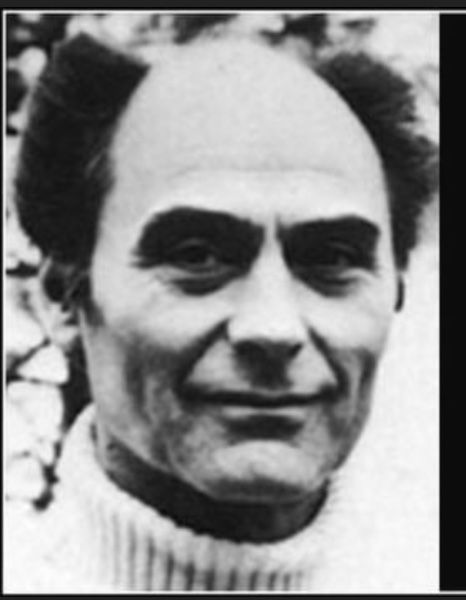
Itzhak Bentov
Itzhak Bentov (1923–1979) was a biomedical inventor and mystic who proposed that consciousness is a fundamental, universal field permeating all matter